Sir Joshua Reynolds PRA
- Years
- –
- Country
- United Kingdom
- Sold items
- 1
Biography
Show more Show less
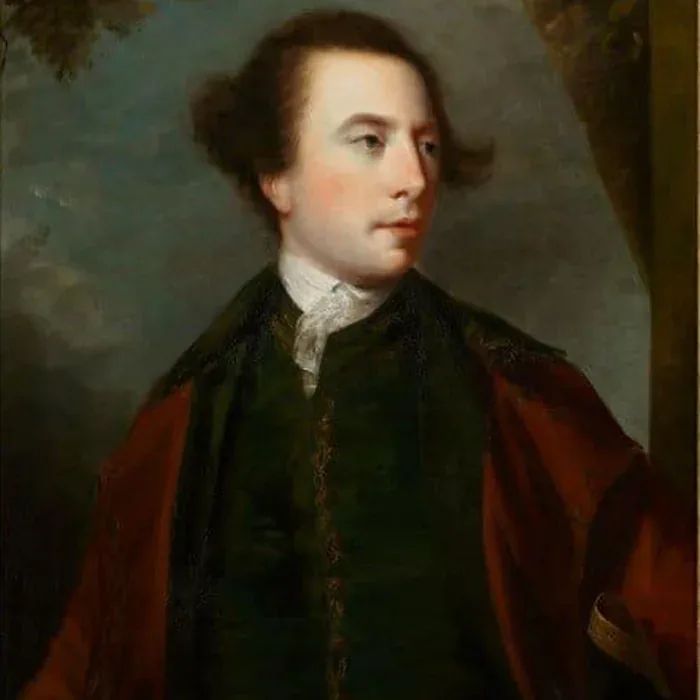
Sir Joshua Reynolds, PRA (1723 – 1792) was the most influential portrait painter of the later eighteenth century. The first President of the Royal Academy, which he co - founded in 1768, he shaped the development of British art, as a leading proponent of the ‘Grand Manner’, an idealised aesthetic style derived from classicism and High Renaissance art, which mirrored the taste and collections of his fashionable patrons. By the end of his career he was viewed as an equal to the great European painters, such as Titian, Velasquez, Rembrandt and Rubens. Reynolds’ success reflected his ability to capture his sitters’ characters, developing a new form of portraiture that brought them to life, using innovative compositions and techniques, going beyond mere recording.
Born in Devon, Reynolds was apprenticed to Thomas Hudson, himself a very fashionable portrait painter, from 1740 to 1743. He subsequently established his career in Devon and London, before setting off for Italy, via Minorca, thanks to the patronage of Commodore Keppel. On his return from in 1753, he rapidly became London’s most fashionable portrait painter, which he remained until the end of his career. His approach was reinvigorated by a visit to the low countries in 1781, and further study of Rubens, his portraits became simpler and more natural, a style with which we can, perhaps, engage better with today.
Reynolds was knighted in 1769, and, in 1784, he became the Principal Painter in Ordinary to the King, testimony to his pre-eminence, given George III did not especially care for him. Nonetheless, the post seems to have disappointed him, writing that it was ‘of near equal dignity with His Majesty’s Rat-catcher.’ Reynolds continued working until he went blind in 1790.
Reynolds work is well represented in British and American museums, and in many National Trust properties.
Additional Information
Royal Academy
National Gallery
National Trust
Tate
National Portrait Gallery